
MANshout
It's not a conversation unless you listen.

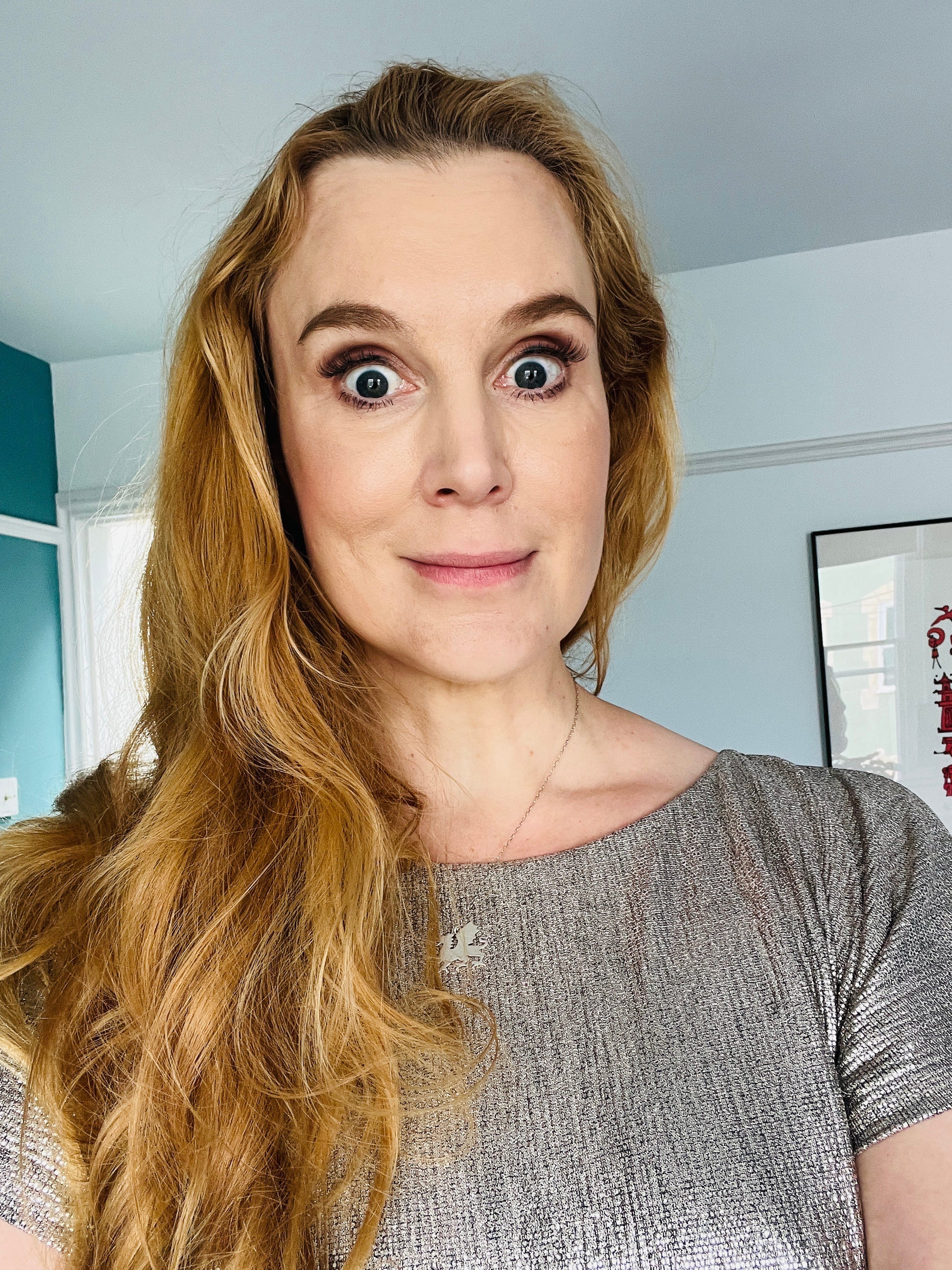
I’m at a publishing party in north London, and feeling insufferably important. When I wrote my first book, Playing To Lose, I’d expected the publishing industry to be a far more sociable affair than it actually is, and this is only the second real party I’ve been to. I’m crazily over-dressed in a silver foil dress with a jeweled belt and matching clutch bag, but at least I made this choice with full knowledge. I already know this isn’t the sort of thing that authors and editors wear, but if I’m going to spend an evening introducing myself to strangers as a porn model, I don’t want to disappoint them by looking normal, in a skirt and sweater.
My back doesn’t appreciate it when I stand up for long, so I’ve cleverly wedged myself into the corner of a sofa, and am simply conversing with anyone who comes and sits near me. This has worked out beautifully — for the last half hour, I’ve been exchanging notes on writing with two ladies who both write historical fiction (amongst many other things), and I’m learning loads. It’s an intoxicating feeling, like having my brain watered. With knowledge, you understand. I’m a flower, in this analogy, and the ladies I’m talking to are a watering can. Or maybe we’re all flowers, watering each other — they’re both more experienced writers than me, but they’ve asked me questions about I approach my work too, and have made me feel like a real writer, with knowledge of my own to share.
I don’t get to talk to anywhere near as many women as I’d like to in a normal working week. Almost all of my customers are men, as are most of the photographers and producers I work with, and while I’ve got close working relationships with many of them, and valuable friendships with a few, female company is nevertheless different, and precious. Most of the women in my own field are at once younger and less experienced than I am, so speaking to women who’re properly established authors is a glorious treat. I know that you’re meant to circulate, at parties, but I have no intention of doing any such thing. This is splendid.
Eventually, one of my new friends has to leave, and I’m sorry to see her go. We promise to read each other’s work, and I hope I’ll meet her again. But in the meantime, there’s still a conversation to be had with Melissa*, my remaining new author friend. We’re discussing writing about traumatic events, and I find myself comfortably telling her how I’ve dealt with writing about child abuse. She’s appears to be a deeply empathic person, and listens intently, before sharing a highly personal story of her own. It’s an honour to have her share herself with me like this, and I have many more questions for this wise, kindly woman that I’ve been lucky enough to meet. I think I’d be happy to spend the rest of the party deep in this conversation.
This is not my destiny. A MAN enters, stage left, and perches on a stool by the window, looking down upon us. He’s very large, with a loud voice, and introduces himself by announcing that he recently retired from a high-powered day job but that he’s recently written a memoir about his experiences. This sounds quite interesting to me, being similar to my own origin story as an author. I prepare to tell him this. There is no opportunity.
DO YOU LIKE STORIES OF LOST LOVE? asks the MAN, rather surprisingly. Melissa says nothing. Probably, Melissa has a great deal more experience of escaping men like this at publishing events, and has better strategies than I have. Sadly, I’m acclimatised to being lectured by men, and when they’re paying me to do so, I’m fairly receptive to it. “I mean, I’ve got nothing against it” I reply, cautiously. Surely he’s not going to launch into a chapter from his memoir without even ascertaining who Melissa and I are?
Alas, this is exactly what he does. The story is lengthy, and not uninteresting, but an awfully odd thing to do to two strangers. I always wonder about people who feel comfortable monologuing at length without first finding out anything about the people they’re addressing. For all he knows, Melissa and I are senior professionals in his field, and we might both be far more successful writers than him. Indeed, Melissa certainly is already that, and even I am further along in my publication journey than he is. In his position, I’d worry about making a bit of a fool of myself by not asking a few preparatory questions before launching into an information dump. This does not appear to be a thing that concerns him.
He finishes his story. Melissa sensibly excuses herself — she has a train to catch. I regret not making my escape at the same time, but it’s too late, he’s thundered into a second story from his book, occasionally interjecting with additional information about his life. His son, he tells me, is very good-looking. I congratulate him. His daughter is very successful. I wonder how he knows this— does he ever let her speak? His wife, it appears, was the one who had the idea that he should write a book in the first place, once he retired. I imagine her, resourceful in a floral shirtwaister dress, discovering that she absolutely could not tolerate sixteen hours of him a day. Considering divorce, then cleverly flattering him into spending his days writing a book in the summerhouse instead. I wonder if she’s about to demand he write a lengthy sequel. “But darling, you’re just SO GOOD. Have you thought about spending the summer writing in the south of France? I can hold the fort down here in Surrey, no problem!”
His eyes are misty — he’s reached the point in the story where, presumably, I am supposed to be moved. Perhaps I would be, if I wasn’t so irritated. But I’ve been wrenched out of a genuinely valuable, and fascinating conversation, in order to be lectured by a man who’s not had the courtesy to even ascertain my name. I decide to punish him by not offering him one of my beautifully printed business cards. That will definitely teach him a lesson.
“I’m so sorry, I have to go, I have a TRAIN TO CATCH” I claim, audaciously imitating Melissa as exactly as I can in hopes that he’ll notice. Of course he doesn’t — why did I think he might have listened to her during the only full sentence she managed to speak in his company?
“OH RIGHT” he says and turns away, already beginning to scan the room for his next victim as he stands up. He has no idea that he’s spent the last twenty minutes in the company of a foil-wrapped porn star. I’m not at all sure that he’s even noticed I’m a woman. Although perhaps that’s naive. Do men talk to other men in this extraordinarily self-aggrandising manner? Perhaps that’s why men used to end up having duels at dawn so often? Or do men of this type specifically see only women as nothing more than a potential audience for their war stories?
I discover that I’m very tired. I walk back across north London in the dark, on a peaceful path next to a canal, enjoying the feeling of reclaiming my own mind, which is infinitely more interesting to me than the MAN who importuned us so thoroughly. I Whatsapp message Melissa, and tell her it was a delight to have a chance to talk. I wonder if what I’ve just witnessed is normal in author-world? I do hope not. At least in porn, the men who want to talk at me in this way realise that they need to pay me for the privilege. No one should be exhausted like this without being at least given money for it.
*Not her real name.
"LIKE" in this context doesn't mean I like what happened: rather, that I'm sorry this boor inflicted himself on you. Some of my fellow-males are, if you'll forgive a blunt comment, complete bellends. It may be a slight consolation to you that boors do occasionally latch on to men, too. I was minding my own business in a jacuzzi not so long ago along with a few other guys when a chap came along, got in and proceeded to harangue us at length about the failings of the British political system. He informed us that he was a South African on holiday here, and he clearly felt he knew more about our politics than any of us. Perhaps he was the son of your literary boor?